Read Online ☆ The Good Soldier PDF by ☆ Ford Madox Ford eBook or Kindle ePUB free
In all matrimonial associations there is, I believe, one constant factor - a desire to deceive the person with whom one lives as to some weak spot in one's character. (page 86)
Where ignorance is bliss, 'tis folly to be wise
Most of us aspire to knowledge and perhaps we hope it will lead to wisdom.
But we make exceptions. Sometimes major ones.
Wilful ignorance of some dark behaviour of another or even oneself: an affair, addiction, abuse, debt, or fraud, for example.
The layers of deception and self-deception build up.
The higher the walls, the more damage if they come tumbling down.
And acknowledging the possible wrongdoing of a friend, lover, or child raises doubts about our own judgement.
If we dare think of it at all, we defend denial as self-preservation.
But sometimes the outcome of inaction is the opposite - for others, if not ourselves.
That is what's at the weak heart of this novel.
Similar themes are explored in a more interesting way, in John Williams' early novel, Nothing But the Night, which I reviewed HERE.
“Presumed innocent until proved guiltyâ€
It is the bedrock of our justice system, coded as article 11 of The Universal Declaration of Human Rights.
That’s fine in a court of law, but doesn’t always work so well in personal relationships.
Doubt gnaws away, from inside, to outside.
We believe or invent excuses:
• “It was only once.â€
• “I didn’t realise what I was doing. I was a bit drunk.â€
• “Everyone else was doing it.â€
• “I can’t help it. Maybe it’s in my genes.â€
• “I was only looking. I didn’t actually do anything.â€
“But I say unto you, That whosoever looketh on a woman to lust after her hath committed adultery with her already in his heart.†Matthew 5:28 (KJV)
The saying doesn’t mean what I thought it did
I knew the phrase about ignorance being bliss, but didn’t know the source. It’s the closing stanza of Ode on a Distant Prospect of Eton College, written by Thomas Gray in 1742.
Rather than celebrating wilfully spurning knowledge and ignoring truth, it’s a nostalgic recollection of the innocence of childhood.
That doesn’t make it any less relevant to this book, just differently so: middle aged people, acting like children.
“Real knowledge is to know the extent of one's ignorance†- Confucius
Quotes
• “An acquaintanceship as loose and easy and yet as close as a good glove’s with your hand.â€
• “Our intimacy was like a minuet, simply because on every possible occasion and in every possible circumstance we knew where to go, where to sit, which table we unanimously should choose.â€
• “His face hitherto had, in the wonderful English fashion, expressed nothing whatever. Nothing.â€
• “He wanted to preserve the virginity of his wife’s thoughts.â€
• “My recollection of that night is only the sort of pinkish effulgence from the electric lamps of the hotel lounge.â€
• “x was a personality of paper - that she represented a real human being with a heart, with feelings, with sympathies and with emotions only as a banknote represents a certain quantity of gold.â€
• “Fighting a long duel with unseen weapons against silent adversaries.â€
• “They had settled down into a model couple and they never spoke in private to each other.â€
• “Skilled servants whose mere laying out of my dress clothes was like a caress.â€
For praise, look elsewhere
I started this with high hopes: a well-regarded classic, about a small group of people with somewhat dark and twisted lives. I often enjoy curmudgeonly old men narrating unreliably, even if there’s casual misogyny. I don’t like them as people, but I’m entranced. John Banville writes them well, for example (see my reviews of some of his novels HERE).
But I found John Dowell irritating, and utterly lacking in charm. He chats away about himself, his wife (Florence), the Ashburnhams (Edward and Leonora), and others more like a mildly inebriated old codger than the mid-forties man he says he is. There are diversions, curious euphemisms (education, wink-wink), and hints of what’s to come (who will die). Worse, he didn’t make me care about any of the people in the story, not even those he repeatedly claims to admire.
For what the book is about, look elsewhere
If you want a plot summary or character descriptions, GR and Google are your friends. The gist is two thirty-something couples, shortly before WW1, and the consequences of their various affairs and cover-ups. One person quietly notes and knows almost everything; another, nothing. Catholicism features strongly, along with differences between Brits and Americans.
Rating
Enjoyment: 1*
Objective quality: 2*
Thought-provokingness: 3*
Favourite part: the illustration on the cover, which is uncredited, and seems unique to this book
Random fact: the original tile, mentioned several times in the text, “The Saddest Story†9781931243629 «Ο καλός στÏατιώτης», Îνα μοναδικό και Ï…Ï€ÎÏοχο μυθιστόÏημα, μια πολÏπλοκη, πεÏίπλοκη ιστοÏία αναφοÏικά με τα ανθÏώπινα κίνητÏα,την Ï€Ïόθεση και την εμπειÏία.
Η ιστοÏία αφοÏά κυÏίως την φιλία και τη φαινομενικά άψογη σχÎση ανάμεσα σε δυο ζευγάÏια.
Το ανδÏόγυνο της εÏποÏης αμεÏικανικής κοινωνίας και το ανδÏόγυνο της επιφανοÏÏ‚ αγγλικής αÏιστοκÏατίας.
Σε μια ιστοÏική πεÏίοδο μεταλλάξεων,
αλλαγών,εξελίξεων και επαναξιολόγησης όλων των κοινωνικών θεσμών και αξιών.
Σε αυτή την Ï„Ïαγικά σημαντική χÏονική πεÏίοδο ο Ford με απόλυτη τόλμη γÏάφει μια αληθινά θλιβεÏή ιστοÏία.
ΧÏησιμοποιεί άψογα ως αφηγητή τον Î'μεÏικανό σÏζυγο, ο οποίος φαινομενικά αναξιόπιστος, δÏσπιστος, ιδιοτελής καταφÎÏνει σιγά σιγά να ξεκαθαÏίσει πως η Ï„Ïομακτικά ανάÏμοστη αφήγηση του είναι αÏκετά συνειδητή και αδυσώπητα σωστή.
ΚαταφÎÏνει να παÏουσιάσει στον αναγνώστη τη φαινομενική αφήγηση πίσω απο μια ψεÏτικη Ï€Ïόσοψη με βαθιά διφοÏοÏμενα ανθÏώπινα κίνητÏα ÏπαÏξης.
Σε αυτό το βιβλίο ο αναγνώστης γνωÏίζει τα πάντα εξ αÏχής μα καταλαβαίνει ελάχιστα.
Î"ίνεται χÏονικά μια αναδÏομική αναδÏομή εξελίξεων και λεπτομεÏειών, δίνοντας το δικαίωμα στον αφηγητή να επιστÏÎφει ή να πετάγεται απο το παÏόν στο μÎλλον και αντίστÏοφα ώστε να Ï€ÏοσθÎτει, να αμφισβητεί ή να δείχνει τα γεγονότα με διαφοÏετικό ηθικό φως.
Σχεδόν στο Ï„Îλος κάθε κεφάλαιου ÎÏχεται μια απÏόσμενη αποκάλυψη, μια συνταÏακτική ανατÏοπή, Îνα σοκαÏιστικό γεγονός και πάντα ο θάνατος.
Έτσι, δημιουÏγείται Îνα ασυνήθιστο μυθιστόÏημα που εστιάζει στην ψυχολογία κυÏίως των δυο ζευγαÏιών.
Των «καλών ανθÏώπων», όπως αÏÎσκεται να χαÏακτηÏίζει ο αφηγητής τους ήÏωες του βιβλίου κÏατώντας τον εαυτό του σε μια σκιά εξωτεÏικής αναζήτησης και Ï€Ïοσωπικής δυστυχίας.
Ένα σαÏωτικό κολάζ αντικατοπτÏίζεται στον καθÏÎφτη της αντίφασης με αντικÏουόμενα Ï€Ïοσωπικά στοιχεία αγάπης, μίσους, πάθους,καθήκοντος, ματαιοδοξίας, απληστίας, δικαιοσÏνης, Ï€Ïοδοσίας, υπεÏηφάνειας και θεσμικών Ï€Ïοκαταλήψεων.
Μια εκπληκτική ελεγεία που θÏηνεί σιωπηλά, ψάχνοντας τα μονοπάτια που οδηγοÏν τον κάθε χαÏακτήÏα στην τελική του μοίÏα.
Καλή ανάγνωση.
ΠολλοÏÏ‚ ασπασμοÏÏ‚. Paperback
The Good Soldier I found to be a difficult book to grasp, at least to begin with. I felt the need to go back over the first 40 pages or so, just to try and accustom myself to it. Things paid of in the end, but it really did require patience; a quiet room, and reading big chunks at a time. The theme is a strong one, that being marriage and adultery, with a narrator who you feel in the dark about, going over the events of two couples, one American, one English, the Ashburnhams, with whom they first meet at a German spa town early in the 1900's, thus they strike up a comfortable friendship. The story is told in a non chronological way, playing around with the memories of time. And there is one thing that struck me that I didn't first realize, the narrator (the American husband) didn't hear the story, he was a participant, and an arrogant one at that.
The two couples would meet abroad for a month every year, and it transpires that one from each couple have been having a clandestine affair. You get the sense everything is drenched in misery, worry and panic the longer it goes on, even a partial happy ending feels false. In fact the very first line reads This is the saddest story I have ever heard. Love here is most certainly a battlefield, through deception, contradiction, blind ignorance and sheer horror, the reader is taken over a threshold into an unsavoury world of troubling passions. There is an air of unreliability in its fashion, in terms of the narrators voice. As if the beginning wasn't hard enough, he relates his tale jumping around in the middle of flashbacks, this would lead to things feel out of sequence, and leaving gaps that we are supposed to decipher, it's not a long novel but does need to be read nice and slow, even as the full realization of what takes place gradually emerges, it's a story that calls for the attentive reader, but there were rewards as I tried to unpick all the fine details, as the narrator's unfolding interpretation of the passionate emotions manifested here are in very small gestures or brief remarks.
He paints the four portraits exceptionally well, where in turn I felt pity but also disgust at those involved. Edward Ashburnham, the owner of a large estate in England; his wife, Leonora, daughter of impoverished Irish gentry, Florence, heiress to a New England fortune; and Nancy Rufford, Leonora's ward, who has lived with Edward and Leonora from the age of 13. And all at some point are plagued with melancholia and unsteady minds. It is clear as the novel proceeds we learn Edward and Leonora have no idea what intimacy is, and they also have no way of finding out, for one thing, neither read, and Leonora consults priests and nuns for marital advice. Edward consults no one, and there seems to be no structure in his life. Others of his class tell dirty stories, perhaps as a form of sharing information, but these only make Edward uncomfortable. Both the American and English marriages suffer from the emasculation of the husbands, and I think there is an element of unfair failures on behalf of Leonora and Florence, but Ford depicts the husbands more complexly and with a clearer eye.
I have to say on the whole I was very impressed; the psychologies of his characters, the interweaving of memories that are done intentionally, and the sadness that echoes throughout, gets the thumbs up from me. I guess the overwhelming question is this, what do we truly know about the people we are supposed to know inside out?
A gracefully forlorn and beautifully explored novel. 4/5 The Good Soldier “I don't know what anyone has to be proud of.â€
― Ford Madox Ford, The Good Soldier
What? You mean this novel isn't about war? Is it possible to hate a book and love it at the same time? This is one of those books where it immediately becomes obvious you aren't going to read this novel for the strict pleasure of it. This book ain't ice cream on the beach folks. I don't think I've run across a more amoral, unsympathetic cast of characters since I visited Kehlsteinhaus. But, Ford Madox Ford is absolutely brilliant at portraying the decay, the depravity and the hypocrisy that existed in early 20th century English and American aristocracy. What a bunch of absolute rat bastards they all were. Nobody is happy. Nobody is true. Everybody gets eventually exactly what they deserve.
This novel probably the most sexless novel containing the subtitle: A Tale of Passion. It is as sexy as a festering cavity and as passionate as an obsessive and unreliable group of narcissists can be. Two of my favorite writers were either heavily influenced by Ford (Graham Greene) or collaborated heavily with Ford (Joseph Conrad). This isn't a novel you can really ever love, but you will carry this novel with you and days and weeks later you still won't be able to escape its funky grasp. And THAT really is something. Ford Madox Ford What a sick, rotten, depraved society we're treated to, populated by liars and knaves, and yet I found myself heartbroken by the end, wondering what kind of magic spell Ford had cast on me. Ford is an absolute master of technique--in this case the use of flashbacks and an unreliable narrator--and I found myself riveted throughout. The novel begins with one of the most famous opening lines in literature: This is the saddest story I have ever heard. That may well be true. 9781931243629
“We are all so afraid, we are all so alone, we all so need from the outside the assurance of our own worthiness to exist.â€
This novel is so stunning. Oh my god. I did not expect it to be this good.
After reading this a second time for my term paper, I'm still in awe of this book. I've never read anything quite like it. First of all, I'm glad I picked this up. We were supposed to read this for a literature class and if it wasn't for this seminar, I would never have picked up this novel in the first place, because it's 1. old and 2. that title sound super boring. Well, the title is just as misleading as this books narrator.
In the end, I should have known. Should have known that repeating I don't know 500 times is a good sign for a narrator's unreliability. Should have noticed the obvious mix up of dates. Should have recognised a liar when he's right in front of me. But all in all my ignorance did result in a fantastic read. Cause I never saw the many turns of events coming. Classics can be surprisingly exciting.
This book - which has the subtitle A Tale of Passion - certainly is that. It has dark desires, hidden affairs, disturbing deaths and lots and lots of despair and madness. It's fantastic. I'd love to see it adapted as a modern film, preferably by Darren Aronofsky.
I already told you enough, now it's your turn to read this book. Have fun and don't let yourself be fooled.
Find more of my books on Instagram 315 Oh! Propriety!
Nowadays there's a word for Edward Ashburnham. And I don't mean some modern vulgarity, unavailable to the Edwardians, something like emotional fuck-up, appropriate as that may be (or not). No, I'm thinking serial monogamist. The term is new, because the concept is new. At the turn of the 20th century there was monogamy. Or there was promiscuity: casual couplings with seamstresses, milliners, laundresses or the convenient and pliable housemaid. A taboo subject, to be spoken of in hushed tones in polite society. These affairs were of necessity casual, because the women, by succumbing to the blandishments of their suitors, had turned themselves into 'fallen' women, immediately and irretrievably. Business partners, the only question being that of remuneration or pay off when favours were no longer required.
So in an age when women were thought of as either Madonna or Magdalene, in matters of the heart, Edward is a modern man, one who sincerely believes himself in love with the object of his desire. His laughable disconnect with conventional attitudes is portrayed in grotesque mode in his dealings with La Dolciquita, the mistress of the Grand Duke of Nauheim-Schwerin. With a passion that 'had arisen like a fire in dry corn' Ashburnham is ready to declare his undying love after a single night. The Spanish lady's passions however are of the more commercial kind. With all the romanticism of a risk assessment manager, she details for him the precise financial condition (twenty thousand) that might induce her to service him as well as the Duke. Premiums, policy, twenty per cent risk stand in sharp relief to Edward's discovery that 'he was madly, was passionately, was overwhelmingly in love with her.' Poor Edward. Poor noble, heroic, respectable, stupid man, to believe in true love. John Dowell, the narrator, has a word for him. Sentimentalist. A prey to his imagined sentiments.
Serial monogamy, thus the Spanish lady is the first in a series. As one might imagine, the world of 1904 does not see this as a valid lifestyle choice. Nor does his wife truly embrace the situation, but rather tries to manage it, even anticipating his desires, arranging, paying expenses - pimping for him? She is certainly not of the disposition or religious convictions that would allow her to discreetly claim sauce for the goose as well as the gander, nor is divorce even thinkable. And like any society, the decorous world of 1904 exacts a price for aberrant behaviour. The price is high, and cannot be paid in hard currency, and will not be paid by Edward alone. Society must go on, I suppose, and society can only exist if the normal, if the virtuous, and the slightly-deceitful flourish, and if the passionate, the headstrong, and the too-truthful are condemned to suicide and madness.
What I've said so far might make this look like a fairly ornery (melodramatic?) exposé of hypocritical Edwardian sexual mores, the story of an unhappy marriage. Complexity is added by John Dowell, our narrator, being one half of a second couple, who dance an intricate minuet with the Ashburnhams. But what makes this so powerful, so mysterious, so haunting is the method of narration. Ford was a friend of Joseph Conrad. Both of them championed the technique that Ford called progression d'effet: as the story progresses it should move forward faster and faster and with more and more intensity. Well, I can testify to unmitigated success there. The start was slow, and demanded a little back and forth and round about, but from part 2 onwards the pages seemed to turn themselves, and from part 3 I'd have robbed myself of any amount of sleep to finish it.
In my recent review of Tomorrow in the Battle Think on Me (gad that sounds soooo pretentious) I mused a little on how a first person narrator could be an encumbrance or limitation. But here the opposite is the case: John Dowell's apparently haphazard way of telling this sad story adds layer upon layer. First there is the challenge of working out the chronology of events, then there are those puzzling enigmas whose true significance only becomes apparent much later, and, most engaging of all, there is the much-debated question of how much we can trust John Dowell at all. Is he disingenuous, or deliberately manipulative, or simply ignorant (as he claims)? This may be the saddest story he's ever heard - heard? But he's telling it! - but is he aware how funny he sometimes is? The delicious irony: before La Dolciquita, Edward gave himself a nasty jar when he found himself comforting a weeping nursemaid in a third class railway carriage, and went a little too far in his half-fatherly concern. The result? The Kilsyte Case. Not quite Dreyfus material, but nasty for him all the same. Multiple ironies: he was travelling third class (!) to please Leonora - see I can economise! - and would never even have met a nursemaid in first class; this, the most innocent of his affairs had the gravest of judicial consequences, and the final irony is that his brush with the law did not discourage him from more flirtation, but in fact opened up the country. Oh, and it brought him closer to his wife.
There is more, so much more than the question of marital fidelity: social classes, America and England, deception - ah deception! Dowell's wife! But I won't spoil it for you. Impressions and ideas. Our first impressions of people, how reliable are they? And Dowell disconfirms the first impressions he gives us over and over and over. Ideas, concepts: can we experience a feeling before we know intellectually that such an emotion exists? Can we feel anything that hasn't had a name put to it?
I'm certain that I will read this again, and if I wrote another review after the second reading it would probably be totally different. And again after the third. Is there any higher praise?
Re-read in July 2019: this time it's all the stuff about religion that struck me hardest.
It is a queer and fantastic world. Why can't people have what they want? The things were all there to content everybody; yet everybody has the wrong thing. Perhaps you can make head or tail of it; it is beyond me. Fiction, Short Stories, Poetry Storytelling is about as much an art as is writing. Any piece of paper can have beautifully constructed sentences, impeccable prose, dazzling verses, yet when there simply is nothing to tell all those words are moot. The alarming strength of the Good Soldier can be found in its maze-like narration that starts off with an innocent consciousness that through the pages, like a survivor seeing a massacre unfold as a blinding mist slowly recedes, realizes one by one the sins of the world he once thought blameless. Most novels take a linear approach to storytelling, which, if anything, makes it easier to follow. But Ford Madox Ford’s novel is unbridled both by the restraints of time, and the compunction to resist the temptation of misleading his audience. Certainly there have been a whole score of writers who have attempted to untangle the deathly winding strings of chaotic storytelling, but it is Madox Ford who truly succeeds in this aspect, if not the first to render it so masterfully. And so with this novel, it is no great wonder that he deeply influenced a bevy of wordsmiths who went on to become master storytellers themselves from Graham Greene to Julian Barnes.
On the surface, the Good Soldier is a tale about two couples, one American â€" the Dowells, one English â€" the Ashburnhams, whose interconnected lives head towards a collision that would leave each of them devastated and shatter the perfectly fragile image of marriage in their souls. However upon closer inspection one realizes that this novel is truly centered on just one of them. This person, I won’t mention which, is the driving force that changes the direction of the haunted lives of the two couples. Of course, the somewhat unreliable narrator in John Dowell whose shifting account is responsible for the novel’s mysterious atmosphere is the observer whose feelings one directly learns. But as soon as the journey starts and things go on their way, one learns that his truth has always been missing a significant piece of information enough to contaminate the assumptions one holds. And thus, even though a lone figure is moving the story, each character gradually adds a distinct element of their truth to the pot of truths that will eventually reach its desolate perfection.
“We are all so afraid, we are all so alone, we all so need from the outside the assurance of our own worthiness to exist.â€
This novel opens saying “this is the saddest story I have ever heard.†And, yes, there certainly is a sentimental sort of sadness that affects this work. However, frightening seems more apt to describe the sensation grasping my heart as this story progresses. It does not only depict the horrifying life of marriages tainted by infidelity but mulls over the different kinds of individuals that exist within its exclusive walls, painfully hidden from the world, all searching for redemption in a sacred union which yields only torture.
Through this novel, Ford Madox Ford shows us the terrifying reality of veiled innocence and the impending tragedy that awaits us as we learn of the horrible truths that are looming over us undetected, like a lost sheep unaware of a pack of wolves surrounding it waiting for the right moment in which lies certain death. 315 Î'υτή: η πιο θλιβεÏή ιστοÏία που Îχω ποτΠμου ακοÏσει â€" η πιο θλιβεÏή.
Είναι η φÏάση οδοδείκτης με την οποία ο Ford Madox Ford υποδÎχεται τους αναγνώστες του σε τοÏτο το μυθιστόÏημα - κομψοτÎχνημα που, διόλου άδικα, συγκαταλÎγεται στα αÏιστουÏγήματα της παγκόσμιας λογοτεχνίας. Είναι η εισαγωγή και το καλωσόÏισμα σε Îνα κÏεσÎντο παθών, σε μιαν εξομολόγηση ενοχών, σε Îνα δÏάμα που χτίζεται και κοÏυφώνεται τελετουÏγικά: σελίδα τη σελίδα, λÎξη τη λÎξη, ÏŒ,τι πιο μÏχιο (μποÏεί να) φωλιάζει στην ψυχή των ηÏώων του ÎšÎ±Î»Î¿Ï Î£Ï„Ïατιώτη ÎÏχεται όλο και πιο σιμά στο φως. Όχι για να καεί, αλλά για να εξαγνιστεί.
Î'υτός, ο μÎγας ανατόμος των ανθÏώπινων σχÎσεων, ο Ford Madox Ford, αφηγείται μια ιστοÏία πάθους, απιστίας και εγκαÏÏ„ÎÏησης. Î"Ïο ευκατάτατα ζευγάÏια, οι Î'μεÏικανοί Τζον και ΦλόÏενς Îτόουελ και οι εγγλÎζοι ΈντουαÏντ και ΛεονόÏα ΆσμπεÏναμ, απολαμβάνουν τα καλοκαίÏια τους στη γεÏμανική λουτÏόπολη του Îάουχαιμ. Ο λόγος της παÏαμονής τους εκεί είναι πως τόσο η ΦλόÏενς, όσο και ο ΈντουαÏντ, ο καλός στÏατιώτης του τίτλου, πάσχουν από την καÏδιά τους. Φαινομενικά, Ï€Ïόκειται για Ï„ÎσσεÏις ανθÏώπους που μοιάζουν να Îχουν τις ίδιες Ï€Ïοτιμήσεις και επιθυμίες, που δÏουν αξεχώÏιστα σαν Îνα σώμα, μια ψυχή. Συναντώνται για Ï€Ïώτη φοÏά το 1904 κι ανανεώνουν το ÏÎ±Î½Ï„ÎµÎ²Î¿Ï Ï„Î¿Ï…Ï‚ κάθε καλοκαίÏι μÎχÏι το 1913. ΕννÎα χÏόνια γαλήνης που διακόπτονται βίαια και με πάταγο, σαν κάθε σαθÏÏŒ οικοδόμημα που ήÏθε η ÏŽÏα του να καταÏÏεÏσει:
Î'ν για εννÎα χÏόνια είχα στην κατοχή μου Îνα όμοÏφο μήλο που ήταν στον πυÏήνα του σάπιο, κι ανακάλυψα τη σαπίλα του μονάχα μετά απο εννÎα χÏόνια κι Îξι μήνες μείον Ï„ÎσσεÏις ημÎÏες, δεν θα είναι αληθÎÏ‚ να πω ότι για εννÎα χÏόνια κÏατοÏσα μήλο; Έτσι λοιπόν μποÏεί να είναι και με τον ΈντουαÏντ ΆσμπεÏναμ, με τη ΛεονόÏα, τη γυναίκα του, και με την καλή μου και άμοιÏη ΦλόÏενς.
Οι κατά φαινόμενο Ï„Îλειοι γάμοι των ηÏώων του βιβλίου αποδομοÏνται καθώς ο Τζον Îτόουελ αφηγείται. Με Îναν Ï„Ïόπο ακανόνιστο, χωÏίς συνοχή, που μοιάζει πεÏισσότεÏο με λαβÏÏινθο, όσα διαδÏαματίστηκαν και σημάδεψαν τις σχÎσεις των ζευγαÏιών της ιστοÏίας μας εξωθοÏνται στο φως. Όπως συμβαίνει πάντοτε σε κάθε λυπηÏή και θλιμμÎνη ιστοÏία, ο αφηγητής της πηδάει ακανόνιστα από το παÏελθόν στο μÎλλον κι από το μÎλλον στο παÏελθόν. Σημεία που παÏαλείφθηκαν, αλλά ÎÏ€Ïεπε οπωσδήποτε να θιγοÏν, παÏεμβάλλονται κατά τον Ïουν της ιστοÏίας, γιατί ο σκοπός του αφηγητή δεν είναι άλλος παÏά να γίνουν γνωστά όλα τα επεισόδια του Ï€ÏÎ¿ÏƒÏ‰Ï€Î¹ÎºÎ¿Ï Ï„Î¿Ï… δÏάματος∙ κάθε λεπτομÎÏεια που οδήγησε στην κοÏÏφωσή του και κάθε υποβόσκον συναίσθημα που Îφτασε ο καιÏός να εκφÏαστεί.
Άδολοι ÎÏωτες, ασθμαίνουσες σχÎσεις, αποκαμωμÎνες καÏδιÎÏ‚: που φλογίζονται και διψοÏν για τον ÎÏωτα, που αÏνοÏνται να δουν τι Ï€ÏομηνÏει η διασάλευση των αισθήσεων που Ï€Ïοκαλεί η παÏουσία Ï„Ïίτων Ï€Ïοσώπων στο πλάνο, Î¼ÎµÏ„Î±Î¾Ï Ï„Ï‰Î½ οποίων αυτή της Îάνσι ΡάφοÏντ, Ï€Ïοστατευόμενης του ζεÏγους ΆσμπεÏναμ.
Τι άλλο είναι η ανθÏωπότητα παÏά Îνα μητÏώο θλίψεων, αναλοζίγεται ο συγγÏ��φÎας και θÎτει ξανά και ξανά το ίδιο, αναπόφευκτα αναπάντητο, εÏώτημα: ΜποÏεί να υπάÏξει άÏαγε Îνας επίγειος παÏάδεισος όπου ανάμεσα στο θÏόισμα, ανάμεσα στους ψιθÏÏους των φÏλλων των ελιών, να μποÏοÏν οι άνθÏωποι να είναι αυτοί που θÎλουν και να Îχουν ÏŒ,τι θÎλουν και να γαληνεÏουν αμÎÏιμνοι κάτω απ’ τις σκιÎÏ‚ και μες τη δÏοσιά; Ή είναι οι ζωÎÏ‚ όλων των ανθÏώπων σαν τις ζωÎÏ‚ μας, σαν τις ζωÎÏ‚ των καλών ανθÏώπων; Σαν τις ζωÎÏ‚ των ΆσμπεÏναμ και των Îτόουελ και των ΡάφοÏντ â€"τσακισμÎνες, θυελλώδεις, αγωνιώδεις και αντιÏομαντικÎÏ‚, πεÏίοδοι με σημεία στίξεως, κÏαυγÎÏ‚, ανημπόÏιες, θανάτους, αγωνίες; Ποιος διάβολο ξÎÏει;
ΕπιγÏαμματικά, όσο πιο λιτά γίνεται να ειπωθεί, ο Καλός ΣτÏατιώτης είναι μυθιστόÏημα πολλών λαμπεÏών αστεÏιών (Îστω Ï€Îντε, όσο το πλαφόν της ιστοσελίδας που μας φιλοξενεί)∙ με ιδιαίτεÏη μνεία στο Ï„ÎταÏτο και τελευταίο κεφάλαιο του βιβλίου που δεν θα μποÏοÏσε να χαÏακτηÏιστεί διαφοÏετικά παÏά ως απλώς μνημειώδες. English «Î'υτή: η πιο θλιβεÏή ιστοÏία που Îχω ποτΠμου ακοÏσει». Î'υτή είναι η Ï€Ïώτη Ï€Ïόταση του ÎšÎ±Î»Î¿Ï Î£Ï„Ïατιώτη και κατά την γνώμη μου η πιο πεÏιεκτική όλου του μυθιστοÏήματος. Î"εν είναι τυχαίο άλλωστε που ο ίδιος ο Ford είχε επιλÎξει ως αÏχικό τίτλο του βιβλίου το «Η πιο θλιβεÏή ιστοÏία» κάτι που δεν Îγινε δεκτό από τον εκδότη ο οποίος δεν ÎβÏισκε καθόλου δελεαστική την ιδÎα να κυκλοφοÏήσει Îνα βιβλίο με τον συγκεκÏιμÎνο τίτλο κατά την διάÏκεια του Î'’ Παγκοσμίου πολÎμου.
Το γιατί είναι τόσο θλιβεÏή αυτή η ιστοÏία Îχει πολλÎÏ‚ απαντήσεις που όσο Ï€ÏοχωÏάς μÎσα της γίνονται ταυτόχÏονα ξεκάθαÏες και πολÏπλοκες, όπως οι άνθÏωποι και τα πάθη τους. Î'φηγητής και Ï€Ïωταγωνιστής του μυθιστοÏήματος είναι ο Îτάουελ ο οποίος μας διηγείται την διάλυση τόσο του Î´Î¹ÎºÎ¿Ï Ï„Î¿Ï… γάμου με την ΦλοÏÎνς όσο κι εκείνου του Ï†Î¹Î»Î¹ÎºÎ¿Ï Ï„Î¿Ï…Ï‚ ζευγαÏιοÏ,0 ΈντουαÏντ και ΛεονόÏα ΆσμπεÏναμ.
Με το Ï€Ïόσχημα ότι ξεκίνησε να καταγÏάφει την παÏαπάνω ιστοÏία εδώ και κάποια χÏόνια δημιουÏγεί μία ακανόνιστη, χÏονικά και δομικά, αφήγηση πάνω από την όποια πλανάται Îνα διαÏκÎÏ‚ «δεν ξÎÏω». Î Ïοσπαθεί να βÏει επιχειÏήματα για να δικαιολογήσει όλη αυτή την άγνοια ή ακόμα και την αφÎλεια με την οποία αντιμετώπιζε την ζωή του αλλά ταυτόχÏονα αναζητά δικαιολογίες σε μία Ï€Ïοσπάθεια να μην ακυÏώσει όλο τον Îγγαμο βίο του ή την μακÏοχÏόνια φιλία με αυτοÏÏ‚ τους «καλοÏÏ‚ ανθÏώπους», όπως επανειλημμÎνα χαÏακτηÏίζει το ζεÏγος ΆσμπεÏναμ.
«Î'ν για εννÎα χÏόνια είχα στην κατοχή μου Îνα όμοÏφο μήλο που ήταν στον πυÏήνα του σάπιο, κι ανακάλυψα την σαπίλα του μονάχα μετά από εννÎα χÏόνια κι Îξι μήνες μείον Ï„ÎσσεÏις ημÎÏες, δε θα’ ναι αληθÎÏ‚ να πω ότι για εννÎα χÏόνια κÏατοÏσα Îνα όμοÏφο μήλο;»
Î'Ïγά ή γÏήγοÏα βÎβαια όλα παίÏνουν την Ï€Ïαγματική τους διάσταση και οι Ï€ÏωταγωνιστÎÏ‚ γίνονται αυτό που ήταν πάντα και καμία θÏησκεία ή κοινωνικός πεÏιοÏισμός δεν στÎκεται ικανός να τους κÏατήσει μακÏιά από τα Îνστικτά τους.
Î'Ï…Ï„ÏŒ που κάνει όμως την όλη ιστοÏία Ï€Ïαγματικά θλιβεÏή είναι ότι στο Ï„Îλος «κανείς δεν πήÏε αυτό που ήθελε», όπως τόσο απλά κι Îντιμα παÏαδÎχεται ο αφηγητής μας. Και όχι μόνο αυτό. Κάθε Ï€Ïωταγωνιστής της ιστοÏίας εκπÏοσωπεί μία ομάδα της κοινωνίας, μιας κοινωνίας που αγκαλιάζει κάθε τι κανονικό και πεÏιφÏονεί οτιδήποτε διαφÎÏει από αυτό.
«Ο ΈντουαÏντ ήταν κανονικός άνθÏωπος, αλλά υπήÏχαν μεγάλες δόσεις ÏƒÏ…Î½Î±Î¹ÏƒÎ¸Î·Î¼Î±Ï„Î¹ÏƒÎ¼Î¿Ï ÎµÎ½Ï„ÏŒÏ‚ του· και η κοινωνία δεν χÏειάζεται Ï€Î¿Î»Ï ÏƒÏ…Î½Î±Î¹ÏƒÎ¸Î·Î¼Î±Ï„Î¹ÏƒÎ¼ÏŒ, δεν χÏειάζεται πολλοÏÏ‚ συναισθηματίες. Η Îάνσι ήταν Îνα θαυμάσιο πλάσμα, αλλά είχε πάνω της το άγγιγμα της Ï„ÏÎλας· και η κοινωνία δεν χÏειάζεται άτομα με το άγγιγμα της Ï„ÏÎλας πάνω τους.»
Ο Καλός ΣτÏατιώτης είναι Îνα μυθιστόÏημα που μποÏεί να διαβαστεί με χίλιους Ï„Ïόπους και να σε κεÏδίσει με άλλους τόσους. Η μετάφÏαση και το επίμετÏο από τον Î"ιώÏγο-ΊκαÏο Μπαμπασάκη ήταν Îνα αÏιστοÏÏγημα. Î"ια να είμαι ειλικÏινής, βÎβαια, δεν πεÏίμενα τίποτα λιγότεÏο από μία τόσο αγαπημÎνη σειÏά, όπως αυτή της Aldina. 315
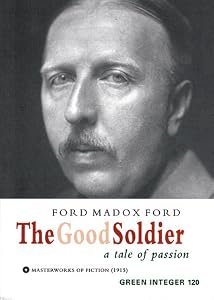
This is the saddest story, the narrator notes of his friend Edward Ashburham’s life. A superb soldier and the perfect English gentleman, the Ashburham has one fatal flaw with regard to affairs of love. Ford weaves a brilliant taleâ€"long recognized as one of the masterpieces of twentieth century fictionâ€"in which nothing is quite what it seems, including the narrator’s telling of the tale. The Good Soldier
Comments
Post a Comment