[Literature Fiction Book] ✓ The Portrait of a Lady PDF by Henry James µ eBook or Kindle ePUB free
Remember when Jim Morrison of the Doors berated the Discrete Charms of the Bourgeoisie as a hell carefully refined and sealed over? It's funny. I have always vainly aspired to a life just like those winners.
I was like poor Hans Castorp.
When I was 20, I wrote in my diary, oh, for a more solid gift of ataraxy! Living my life with any kind of sophisticated aplomb was always out of reach. I was a clumsy oaf.
And yet that's exactly the kind of life Isabel Archer sees in Ralph Touchant and she aspires to it, too!
Reading this in the cold autumn of 1970 - on the hot isle of Barbados, of all places, where the hoar frost of Autumn is nonexistent - I was recovering from my violent coming of age, and craved what I also saw as the immaculate self-possession of the Touchants.
Alas.
That esteemed aplomb was the prevaricating tip of a Monstrous Iceberg!
Yes, I'm serious, folks. Looks like Jim Morrison was right, in the more perfect hindsight that this Plague Year, fifty years later, affords.
It's a grim world, guys.
Only now we KNOW it. We have seen Medusa's face and have been frozen into place by our Fear And Loathing.
The world's not safe anymore.
Bottom line, of course, is Ralph Touchant LIED to Isabel...
And, as she later discovers, Life's not REALLY a Bed of Roses. Literature Fiction, Short Stories Were the writers of the 19th century all psychologists before their time and specialists in the feeling of love to top it off? Like Jane Austen's books, Portrait of a Lady struck me with the accuracy of the many characters' slightest source of in-depth psychological analysis.
It is a real feat that aroused my amused admiration and the impression of a better understanding of our functioning but very few emotions. In short, a piece of the bravery of 600 pages, which sometimes makes one think a little of Machiavelli or Dangerous Liaisons and, in my eyes, has not aged a bit, except perhaps for the sometimes very convoluted style and which requires a great concentration.
The novel portrays Isabel Archer, a free, intelligent, and beautiful young American who dreams of discovering Europe and life more ambitiously. Around such a heroine, there is no lack of suitors, schemers, and faithful. Isabel sometimes knows how to recognize them and make the right choices. But not always. Sometimes, she goes straight into the trap, especially as she wants to be independent in the face of her friends who have warned her. Moreover, his bad choices, stubbornness, and difficulties are the most exciting and realistic, making the book much more than a learning novel, a little cutesy and complicated.
Ironic and disillusioned but also courageous and generous, this portrait of a woman (which could moreover be in the plural as Mme Merle, Henrietta, Mrs. Touchet, and Pansy are present) deserves its place in the museum or your library. 9780141439631 Ugh, ech, the elitism that breeds in readers! We think we're such nicey cosy bookworms and wouldn't harm a fly but we seethe, we do. Of course, readers of books just naturally look down on those who don't read at all. In fact they try not to think of those people (nine tenths of the human race I suppose, but a tenth of the human race is still a big number) because it makes them shudder. (How lovely it would be to go riding in a carriage through some dreadful council estate flinging free copies of Ulysses and Mrs Dalloway right and left (although Ulysses might catch some of those urchins a hefty blow on the temple (which might cause a shift in their brain landscape and evoke a sudden craving for modernist novels, like when people are struck by a bus and wake up talking in a French accent, that can happen))). So that's one obvious kind of reader elitism. But then, some readers think that what the majority of readers actually read is appalling (Hungervinciboneskitehelpslappery Twilit Shades of Pottery doo dah). It's not that you read, it's what you read. Of course. And then, amongst those elevated readers, some literary authors are considered greater than some others (why are you wasting your time with William Gaddis when you could be knee-deep in Proust, dwarling? I simply don't understand it). And then, even when you scale the heights and find yourself munching down some Henry James like he was the last well-done steak (with Chateau Lafleur) you were going to get before your solo trek (no huskies) to the south pole, you still get it - oh dwarling, why are you still dillydallying in the Middle Period when you still haven't read The Golden Bowl you naughty Jamesian you!
Thus it is that I say - oh no, not The Portrait of a Lady. Too too obvious. Try The Awkward Age or The Ambassadors. Much better. Paperback I had many wonderful moments while reading this book, moments when the writing halted the reading, when I had to pause and admire and wonder.
Moments when the book seemed to speak to my own experience as if it were written expressly for the girl who was me at twenty-two, causing me to wonder how Henry James could have guessed so well the presumptuous ideas I had about life and love at that early stage.
All of that is very personal, of course, and not necessarily of interest to other readers, but there were other moments in my reading of The Portrait of a Lady that better merit mention in a review. I had read this book before, about twenty years ago, so although I knew the bare bones of the story, I remembered few of the details. I certainly had no recollection of reading a particular scene from early in the story, the one in which Isabel Archer meets a stranger in her aunt’s house.
And yet there was something about the lead-up to that scene that caught my attention this time: the house is very still because Isabel’s uncle is dying. Out of the silence comes the sound of someone playing the piano. Wonderingly, Isabel makes her way toward the source of the harmony.
Those six words were like a bell ringing in my mind. I felt a sharpening of interest, an awareness of how pivotal this moment would be in the story. I remember thinking: I've been reading this book with all senses on alert and this is my reward; I've sensed the author’s excitement at the turn his story is about to take.
There was another scene later in the book when I had a similar feeling of change about to happen: Isabel sits up late one night in Rome pondering a difficult decision, indeed pondering all the decisions in her life so far. The reader watches with her and wonders how she will act. And wonders again when she finally does.
There are other major shifts in the narrative but none stood out for me quite the way those two did. In fact, Henry James purposely avoids describing the most significant shift of all, by skipping a three-year section of Isabel’s life completelyâ€"which is a very effective narrative device of course, introducing both surprise and suspense in a story that has only a six-year span in total.
As a reader I appreciated both strategies: the emphasis he seemed to place on some scenes and the complete omission he allowed to others. It was all very wonderful.
In fact this book has revised my idea of what ‘wonderful’ means. 'The Portrait of a Lady' is vying for a place as the highlight of my Henry James reading year even though The Ambassadors was already firmly camped in that position. I've decided they can be the joint highlightâ€"they have a lot of wonderfulness in common.
When I finished 'The Portrait', I turned to HJ’s 1906 appendix and found a paragraph about his concerns for the reader. He writes that he has purposely piled brick upon brick for our benefit, carefully including the details that will enable us to grasp the totality of his creation. And among those details, he mentions two in particular, keystones in the building of the story as it were.
The first is the piano scene I described earlier. He speaks of the rare chemistry of that scene in which Isabel recognizes that a huge change is about to happen in her life. I felt really validated as a reader to have been aware in advance of the significance of what I was about to read, and so I wasn't surprised when his other pivotal scene turned out to be the one where Isabel sits up late into the Roman night, pondering her decisions. This is the sixteenth Henry James book I've read in six months. Perhaps I've learnt something of the way his writer’s mind works!
More confirmation of that possibility came when he began to discuss the shape of this novel. He continues to speak in terms of bricks and architecture and proportions, and he says that of all his novels, 'The Portrait' is the best proportioned with the exception of a novel he was to write twenty-two years later: The Ambassadors. Alongside a certain ‘roundness’ in shape which they share, he finds they also share a kind of supporting beam or rib that runs through them. This rib is made from two minor but key characters, Henrietta Stackpole and Maria Gostrey. Both seem extraneous to each story at first glance yet both are central to the architecture of their particular story. I remember noting that Maria Gostrey was the thread that allowed me to find my way through the labyrinth that was 'The Ambassadors' so it was wonderful to hear Henry James confirm that, and underline the links between the two books as well.
I was also reminded that I had begun to look at his books in terms of architecture while reading The Wings of the Dove, so I really appreciated his architectural metaphors.
In fact the appendix left me amazed and wondering at every turn. In the updates, I quoted part of a paragraph on his theories about the ‘house of fiction’. I'd like to quote the whole thing here because it is really worth readingâ€"and it provided me with huge insights into some Gerald Murnane books I've puzzled over in the past, The Plains and Inland, and offered a strong desire to read Murnane's Million Windows:
The house of fiction has in short not one window, but a millionâ€"a number of possible windows not to be reckoned, rather; every one of which has been pierced, or is still pierceable, in its vast front, by the need of the individual vision and by the pressure of the individual will. These apertures, of dissimilar shape and size, hang so, all together, over the human scene that we might have expected of them a greater sameness of report than we find. They are but windows at the best, mere holes in a dead wall, disconnected, perched aloft; they are not hinged doors opening straight upon life. But they have this mark of their own that at each of them stands a figure with a pair of eyes, or at least with a field-glass, which forms, again and again, for observation, a unique instrument, insuring to the person making use of it an impression distinct from every other. He and his neighbors are watching the same show, but one seeing more where the other sees less, one seeing black where the other sees white, one seeing big where the other sees small, one seeing coarse where the other sees fine. And so on, and so on; there is fortunately no saying on what, for the particular pair of eyes, the window may NOT open; “fortunately†by reason, precisely, of this incalculability of range. The spreading field, the human scene, is the “choice of subjectâ€; the pierced aperture, either broad or balconied or slit-like and low-browed, is the “literary formâ€; but they are, singly or together, as nothing without the posted presence of the watcher without, in other words, the consciousness of the artist. Tell me what the artist is, and I will tell you of what he has BEEN conscious. Thereby I shall express to you at once his boundless freedom and his “moral†reference.
…………………………
This book is the final one in my 2017 Henry James season and I can't think of a better title to finish on. But in every ending there are beginningsâ€"'The Portrait' has led me to another book: Henry James says he took the slight ‘personality’, the mere slim shade of an intelligent but presumptuous girl and created what he called ‘an ado about Isabel Archer’. That reference has prompted me to go back to Shakespeare and read Much Ado About Nothing.
I do love when one book leads to another! Paperback Ugh.
If I could describe this book in one word it would be Laborious.
If I were allowed more space, which apparently I am, I would go on to say that in addition to being deathly slow and horrifically boring it is also a little brilliant, a little impressive, and, if you have the patience to look for it, more than a little interesting.
There's a LOT in here. James wanted this novel to be the antidote to the Jane Austen romance. He wanted to show life as it is- money as a burden, marriage as a trap, and people as egotistic, petty, manipulative, and kind.
If I told you how disappointing the ending is, though, you wouldn't want to read it, so I won't mention that.
If you have the patience, it's worth reading, but not unless you read it closely. I recommend a Norton Critical Edition. Paperback
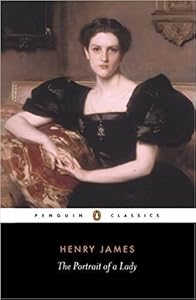
When Isabel Archer, a beautiful, spirited American, is brought to Europe by her wealthy Aunt Touchett, it is expected that she will soon marry. But Isabel, resolved to determine her own fate, does not hesitate to turn down two eligible suitors. She then finds herself irresistibly drawn to Gilbert Osmond, who, beneath his veneer of charm and cultivation, is cruelty itself. A story of intense poignancy, Isabel's tale of love and betrayal still resonates with modern audiences.
The Portrait of a Lady
The Portrait of a Lady, Henry James
The Portrait of a Lady is a novel by Henry James, first published as a serial in The Atlantic Monthly and Macmillan's Magazine in 1880â€"81 and then as a book in 1881.
It is one of Henry James's most popular long novels and is regarded by critics as one of his finest.
The Portrait of a Lady is the story of a spirited young American woman Isabel Archer, who, in confronting her destiny, finds it overwhelming.
She inherits a large amount of money and subsequently becomes the victim of Machiavellian scheming by two American expatriates.
Like many of James's novels, it is set in Europe, mostly England and Italy.
Generally regarded as the masterpiece of James's early period, this novel reflects James's continuing interest in the differences between the New World and the Old, often to the detriment of the former.
It also treats in a profound way the themes of personal freedom, responsibility, and betrayal.
تاریخ نخستین خوانش: روز نوزدهم ماه نوامبر سال1976میلادی
عنوان: تصویر یک زن؛ اثر: هنری جیمز؛ مترجم: مجید مسعودی؛ نشر: تهران، در دو جلد، سال1348ØŒ در866ص، جلد دوم در31ص Ùˆ433ص؛ موضوع: داستانهای نویسندگان ایالات متØده آمریکا - سده19Ù…
عنوان: تصویر یک زن؛ اثر: هنری جیمز؛ مترجم: مجید مسعودی؛ ویراستار: عنایت سمیعی؛ نشر: تهران، نیلوÙر: شرکت انتشارات علمی Ùرهنگی، چاپ دوم از ویراست دوم سال1390ØŒ در798ص، شابک9789644484964Ø›
شخصیت اصلی داستان، چنانکه ‌از عنوان کتاب برمی‌آید، یک زن جوان به ‌نام: «ایزابل آرچر» است؛ «ایزابل» دختری «آمریکایی» Ùˆ معصوم Ùˆ جذابی‌ است، Ú©Ù‡ ‌بنا به ‌پیشنهاد خاله‌ ÛŒ خویش خانم «تاچت»، Ùˆ زیر پشتیبانی او، از «آمریکا» به ‌«انگلستان» می‌آید؛ «هنری جیمز» داستان را Ú©Ù‡ پنجاه Ùˆ چهار Ùصل دارد، Ùˆ ترجمه ‌ی Ùارسی آن در866صÙØÙ‡ ‌است؛ در «انگلستان» Ùˆ در Ù…Øوطه‌ ÛŒ چمن وسیع خانه‌ ÛŒ خاله‌ ÛŒ «ایزابل» آغاز می‌کنند؛ Øاضرین در صØنه، ‌سه ‌نÙر هستند، Ú©Ù‡ ‌هر سه ‌نقشی تعی��ن کننده، ‌در زندگی «ایزابل»، ایÙا خواهند کرد؛ این سه تن «شوهر خاله‌ ÛŒ ایزابل آقای تاچت»، «پسر خاله ÛŒ ‌بیمار Ùˆ دوست داشتنی او رالÙ»، Ùˆ «دوست خانوادگی تاچت‌ ها لرد واربرتن٠سی Ùˆ پنج ساله‌ ÛŒ جذاب، مجرد Ùˆ بسیار ثروتمند»، هستند
تاریخ بهنگام رسانی 15/10/1399هجری خورشیدی؛ 04/09/1400هجری خورشیدی؛ ا. شربیانی 9780141439631 *SPOILER ALERT* (Read at your own risk)
My first time to read a book by Henry James.
Reading The Portrait of a Lady, said to be his finest novel, is like getting your workout at a gym.
After a day’s work you are tired. You are already zapped of energy. You feel like going to a bar and have a couple of beer listening to a funky live band or the crooning of a lovely young lady. Or you want to go to a nearby mall and sit in the comfort of a dark movie house. Probably sleep to rest for a couple of hours if the movie turns out to be boring.
But you decide to go as you planned at the start of the day. Your gym bag is in your car. You drag your heavy feet to the parking lot. To the gym. You know you have to do it your friend has been telling you that Henry James is good but you imagine the taste of cold beer quenching your thirst or the soft seat inside the theater or the pretty songbird wearing a plunging neckline or showing her slim smooth legs there are quick reads waiting for you like Ray Bradbury’s Farenheit 451 or that Flowers for Argenon by Daniel Keyes. But you know your body needs exercise. You are becoming fatter, heavier and your waistline is expanding. You resisted the quick but empty lure of beer or sleep at the movie house. Your heart is telling you that Henry James is an author to read. Like a zombie, you continued sleepwalking to the gym.
After changing to your gym attire. You step on the treadmill. The solitude of working out. In the gym, you rarely talk to anyone. Henry James used a style that was distinctively his: wordy yet illuminating You are by yourself. Most of your friends don’t care about Henry James. You begin to walk. Warm up. After a couple of minutes, you increase the speed. Chug. Chug. Chug. It goes on and on. His storytelling went on and on. His characters came from New York, to England, went to Paris, then to Rome and then went back to England and finally went back to Rome. After the treadmill, you lift some weights as you also need to tone some muscles. His characters were varied. There was Isabel Archer fighting for her independence by refusing marriage proposals like there was not tomorrow but in the end she found with the wrong man: conceited, two-timer, treacherous and condescending. Some muscles are not supposed to be exercised right after a neighboring one. They could be contradicting each other and not only you will not get the maximum benefit from your workout but you are in the danger of having an injury like some pulled muscles. Isabel’s cousin Ralph Touchett is the “conscience†of the novel, telling by instinct whether the person-character is good or bad. He is sick but he is the only character that has the purest heart.
You came to the gym gloomy and dragged your feet as you did not have the energy even to go up a couple of stairs. Some people agonize reading this kind of 19th century Victorian English But when you came out to go back to your car, you felt energized and refreshed. You felt triumphant that Isabel Archer was going back to Rome for Pansy not necessarily for Oswald. But she decided whatever her heart was telling her. In the end, it was all that mattered: independence. She followed her heart: a personal triumph.
In the end, you did not regret going to the gym. In the end, I am happy I read a Henry James.
0141439637 For my dear friend Jeffrey Keeten: I would not have read it if it were not for you. Thanks!
Henry James’ The Portrait of a Lady touched me deeply. Since I finished this novel a few days ago, I could not seem to stop thinking about it as I tried to organize my feelings. That I was mesmerized by it, there is no doubt. So much that the search for its understanding has occupied practically all my free moments. And to fully grasp it I could not do without Henry James masterful help, so forgive me if you find I quote him too often. Oh, but this is a work in progress, so forgive me again for any inaccuracy or inconsistency.
1. The complexity of Isabel Archer
Millions of presumptuous girls, intelligent or not intelligent, daily affront their destiny, and what is it open to their destiny to be, at the most, that we should make an ado about it? The novel is of its very nature an ado, an ado about something, and the larger the form it takes the greater of course the ado. Therefore, consciously, that was what one was in forâ€"for positively organising an ado about Isabel Archer.
Portrait of a Lady is the story of a young American woman, Isabel Archer, and her voyage of self-discovery. I loved getting into Isabel's conflicted mind, her doubts and her confidence, her wishes and her choices. I went even further and identified thoroughly with Isabel Archer. I could relate to her conflicted mind, her dreams and ultimate choices. She was a pleasure to know, because she is so extraordinarily complex, complex in a way that fictional people seldom are.
From the first we learn how Isabel valued her freedom, in a dialogue with her cousin Ralph:
‘Adopted me?’ The girl stared, and her blush came back to her, together with a momentary look of pain...
‘Oh no; she has not adopted me. I’m not a candidate for adoption.’
‘I beg a thousand pardons,’ Ralph murmured. ‘I meant...
‘You meant she has taken me up. Yes; she likes to take people up... but,’ she added with a certain visible eagerness of desire to be explicit, ‘I’m very fond of my liberty.’
The secondary characters are there to explain Isabel Archer, as Henry James tells us “they are there, for what they are worth… the definite array of contributions to Isabel Archer’s history. I recognized them, I knew them, they were numbered pieces of my puzzle, the concrete term of my ‘plot’.â€
Mrs. Touchett, her aunt, brings Isabel to Europe but is indifferent and unfeeling; Ralph is initially amused by her and helps her to inherit a fortune, only to guarantee her choices and the freedom to follow them (he probably is the only one that thoroughly loved Isabel); Madam Merle manages her meeting with Osmond and makes sure they end up married; Osmond thinks of her as one more item for his collection; Mr. Goodwood is persistent and never loses interest in her life (coming back again and again to see how she is), but seems to offer nothing more; Lord Warburton is a fair aristocratic friend to Isabel, but was he truly in love with her or merely looking for a trophy wife?; Henrietta Stackpole, is a true friend and probably an antithesis to Isabel; and Pansy, the artless creation of her husband, depends on Isabel as the only person who throughly loves her. So everyone, including the reader, look upon her, judge her decisions and contemplate as she takes each of her fateful steps into her destiny.
Oh, there is much more about Isabel, and I hope I will be able to know her better once I am finished.
2. The images and metaphors of Isabel Archer’s life
To discuss this I first I want to tell you about a recurrent dream I had for a very long time. Sometimes, I dreamed that I was walking down the corridor on my home and discovered a door I had never realized existed; deciding to explore I would open it and it led me to a new, endless row of rooms, all grand with high windows and sunny, overlooking majestic gardens that I had never observed existed before. As I opened each door amazing new discoveries were revealed to me. My feelings were of exuberance, of happiness to have discovered so much beauty inside my home. But there was a variation to these recurrent dreams, or worst, there were also nightmares. In these I also discovered new places never visited before, however they would be dark and looked nowhere. As a result of this oppressive atmosphere I used to feel like I was in an endless prison inside my own home. I rejoiced in the first and feared to revisit those nightmares.
So, when I started reading The Portrait of a Lady, it was fascinating to read how Henry James uses symbolic or metaphorical architectural spaces and places to tell us about Isabel Archer and her life. This was something I knew and it remitted directly to my dreams and my deepest self.
Her imagination was by habit ridiculously active; when the door was not open it jumped out of the window. She was not accustomed indeed to keep it behind bolts; and at important moments, when she would have been thankful to make use of her judgement alone, she paid the penalty of having given undue encouragement to the faculty of seeing without judging.
We first meet Isabel at Gardencourt,
Her uncle’s house seemed a picture made real; no refinement of the agreeable was lost upon Isabel; the rich perfection of Gardencourt at once revealed a world and gratified a need. The large, low rooms, the deep greenness outside, that seemed always peeping in, the sense of well-ordered privacy in the centre of a ‘property’â€"...much to the taste of our young lady, whose taste played a considerable part in her emotions
By marrying Osmond Isabel ends up enveloped in a palace dark and suffocating:
She could live it over again, the incredulous terror with which she had taken the measure of her dwelling. Between those four walls she had lived ever since; they were to surround her for the rest of her life. It was the house of darkness, the house of dumbness, the house of suffocation. Osmond’s beautiful mind gave it neither light nor air; Osmond’s beautiful mind indeed seemed to peep down from a small high window and mock at her.
There, she seeks refuge or consolation on the ruins of Rome, for her a symbol of hope for despite their long sufferings they are still standing.
She had long before this taken old Rome into her confidence, for in a world of ruins the ruin of her happiness seemed a less unnatural catastrophe. She rested her weariness upon things that had crumbled for centuries and yet still were upright; she dropped her secret sadness into the silence of lonely places, so that as she sat in a sun-warmed angle on a winter’s day, she could smile at it and think of its smallness.
But, ultimately, she seeks refuge once more at Gardencourt.
All purpose, all intention, was suspended; all desire too save the single desire to reach her much-embracing refuge. Gardencourt had been her starting-point, and to those muffled chambers it was at least a temporary solution to return. She had gone forth in her strength; she would come back in her weakness, and if the place had been a rest to her before, it would be a sanctuary now.
3. Isabel’s choices and freedom
Isabel's ability to choose, and the choices she makes are the thread that is carefully woven throughout the novel, and it raises her stature as a fictional heroine, in my opinion, to the level of that of an Anna Karenina or an Emma Bovary. For better or for worse.
‘I’m not bent on a life of misery,’ said Isabel. ‘I’ve always been intensely determined to be happy, and I’ve often believed I should be. I’ve told people that. But it comes over me every now and then that I can never be happy in any extraordinary way; not by turning away, by separating myself.’
‘By separating yourself from what?’
‘From life. From the usual chances and dangers, from what most people know and suffer.’
The moment Isabel inherits starts the process whereupon she loses some of her freedom…
There’s one remarkable clause in my husband’s will,’ Mrs Touchett added. ‘He has left my niece a fortune.’
‘A fortune!’ Madame Merle softly repeated.
‘Isabel steps into something like seventy thousand pounds.’
Madame Merle’s hands were clasped in her lap; at this she raised them, still clasped, and held them a moment against her bosom while her eyes, a little dilated... ‘Ah,’ she cried, ‘the clever creature!’
And around Isabel there is always a sense of danger:
‘I try to care more about the world than about myselfâ€"â€"but I always come back to myself. It’s because I’m afraid.’ She stopped; her voice had trembled a little. ‘Yes, I’m afraid; I can’t tell you. A large fortune means freedom, and I’m afraid of that. It’s such a fine thing, and one should make such a good use of it. If one shouldn’t one would be ashamed... I’m not sure it’s not a greater happiness to be powerless.’
But was she really free or were her choices not as free as she dreamed? Or was it all inevitable to some degree? It seems that Isabel Archer's life was to some extend inescapable and this fact was not totally unknown to her. However, she thoroughly recongnizes how misguided she had been in her choice of husband.
It was as if he had had the evil eye; as if his presence were a blight and his favour a misfortune. Was the fault in himself, or only in the deep mistrust she had conceived for him? This mistrust was now the clearest result of their short married life; a gulf had opened between them over which they looked at each other with eyes that were on either side a declaration of the deception suffered.
Subsequentely, Isabel remains too proud to show it to the her friends. But despite all her efforts to conceal her misery, she cannot camouflage it from Ralph and Caspar:
‘Watching her?’
‘Trying to make out if she's happy.’
‘That's easy to make out,’ said Ralph. ‘She’s the most visibly happy woman I know.’
‘Exactly so; I’m satisfied,’ Goodwood answered dryly. For all his dryness, however, he had more to say. ‘I’ve been watching her. She pretends to be happy; that was what she undertook to be; and I thought I should like to see for myself what it amounts to. I’ve seen,’ he continued with a harsh ring in his voice, ‘and I don’t want to see any more. I’m now quite ready to go.’
Sorrowful and heartbroken, that's how this passage made me feel. But she is never to be pitied, she always stands upright despite doomed adversity.
Yes, I suspect there is a sense of inevitability (what choices did she have, where her other suitors conductive of real happiness? I think not!) which could have made Isabel Archer’s into a tragedy. But she is far from it, she still has choices. Nevertheless, James’ work is not merely that. It is a reflection upon the ideal of a relative freedom and a play with its execution in a woman’s life; the actions, its struggles and the consequent decisions taken by choice. This is what James has achieved with this work; that liberty is not only an ideal but a responsibility too. Though the reader may not approve of all her choices at the end, keeping in mind the betrayal of trust brought about by Madam Merle and Osmond, they were all freely taken or the result of her own will. A will which comes not merely from the limitations imposed by society, but by a newfound maturity, result of all her suffering, and above all from the vow to remain true to oneself.
4. Henry James gives the reader plenty of room to imagine
There’s something about Henry James’ work, and here in particular, that flares, tosses back and forth with unspoken frustration and desire. James’ art, the one thing that makes him stand out for me, is in how he somehow implies, suggests, hints, but never outright tells the reader the ins and outs of his story. He even skips years, and it only adds to its enjoyment. If you want to live along with Isabel Archer, and I felt like I did, is to be conquered by infinite possibilities. Here we are not mere spectator or bystanders but may live everything along with her, if we want to. It is a hard reading that requires effort, but if we invest in it we can grasp the possibilities the whole world that exists beneath the surface of his work.
5. Her ultimate choice
Isabel falls for Gilbert Osmond, to my mind, partly because he does not mindlessly adore her, does not fawn over her. He takes his time in the courtship, he (with the help of Madame Merle) has a clear strategy and it works. He is mysterious, indolent; and there is the hint of a darker side. He appears to be tired of everything, simply bored, so Isabel feels like for once she is helping somebody. That her inheritance has a meaning, a destiny. She seems to feel recompensated and fulfilled.
...‘What has he ever done?’ he added abruptly.
‘That I should marry him? Nothing at all,’ Isabel replied while her patience helped itself by turning a little to hardness. ‘If he had done great things would you forgive me any better? Give me up, Mr Goodwood; I’m marrying a perfect nonentity. Don’t try to take an interest in him. You can’t.’
And we are not the only ones to be surprised by her choice to marry Gilbert Osmond. Ralph was appalled:
‘I think I’ve hardly got over my surprise,’ he went on at last. ‘You were the last person I expected to see caught.’
‘I don’t know why you call it caught.’
‘Because you’re going to be put into a cage.’
‘If I like my cage, that needn’t trouble you,’ she answered.
...‘You must have changed immensely. A year ago you valued your liberty beyond everything. You wanted only to see life.’
But she still has another choice ahead of her. Her ultimate choice is whether or not to return to Osmond after she goes to Gardencourt to visit her dying cousin. Again Henry James gifts us with a superb image that could not translate better the pervading dread of what she is about to do:
There was a penetrating chill in the image, and she drew back into the deepest shade of Gardencourt. She lived from day to day, postponing, closing her eyes, trying not to think. She knew she must decide, but she decided nothing; her coming itself had not been a decision. On that occasion she had simply started.
And at last we understand her ultimate decision, although such resolution is not easily reached.
There were lights in the windows of the house; they shone far across the lawn. In an extraordinarily short timeâ€"for the distance was considerableâ€"she had moved through the darkness (for she saw nothing) and reached the door. Here only she paused. She looked all about her; she listened a little; then she put her hand on the latch. She had not known where to turn; but she knew now. There was a very straight path.
In the end I recognized a worthier and more mature Isabel Archer, and I think that she comes out of her sufferings stronger. I would like to imagine Osmond would be surprised by her when she gets back to Rome, and that she would be able to change her standing. Their roles perhaps altered. Although there should certainly be more anguish ahead of her, given what she is going back to, I imagine there is always the possibility of happiness.
______ 9780141439631 10 Things I Love About Henry James’s The Portrait Of A Lady
1. Isabel Archer
The “lady†in the title. Beautiful, young, headstrong and spirited, the American woman visits her wealthy relatives in England, rejects marriage proposals by two worthy suitors, inherits a fortune and then is manipulated into marrying one of the most odious creatures on the planet, Gilbert Osmond. She’s utterly fascinating, and if I were back in university, I imagine having long conversations and arguments about her character. What does she want: Freedom? The ability to choose, even if it’s a bad choice? Is she a projection of James’s latent homosexuality? Is she a feminist or not? There are no simple answers.
2. The Prose and Psychological Complexity
Damn, James knew how to write long, luxuriant sentences that dig deep into his characters’ minds. Sometimes the effect can be claustrophobic â€" get me out of this person’s head! â€" but more often it’s utterly compelling and convincing. We partly read fiction to learn about other people’s lives, right? Well, James does that. (The exceptions: Isabel’s two wealthy, handsome suitors, Warburton and Goodwood, are less than believable, and remind me of eager (or horny?) dogs, their tails wagging whenever they’re around their love/lust object.)
3. The Story
Okay, not much really happens. But as the book progressed, even though I sort of knew the outcome (it’s hard to avoid spoilers from a 135-year-old classic), I was increasingly curious to see how Isabel would act. In fact, I raced through the final chapters, breathlessly. Who knew: Henry James, page-turner! And have a theory about that ending? Take your turn...
4. The Humour
It’s not a comedy, but there are lots of amusing bits. James’s narrator is genial and funny. Henrietta Stackpole, her gentleman friend, Mr. Bantling, and even Gilbert Osmond’s sister, the Countess Gemini, are all very colourful characters who elicit a chuckle or two. And Isabel’s aunt can be terribly cutting as well. I love Ralph (Isabel's cousin) and the dignified British Lord Warburton’s reactions to the enterprising, no-fuss American “lady journalist†Henrietta.
5. The Settings
Each one is significant: from the stately Gardencourt, home of Isabel’s relatives the Touchetts, to the bustle and anonymity of London, to the ruins of Rome, where Isabel finds herself stuck in a dead, fossilized marriage. James is a master at finding the right place to stage a scene. I could write an essay about interiors and exteriors in the book, but I’ll spare you.
6. The Villains
Madame Merle and Gilbert Osmond: individually they’re sinister, but together they’re positively Machiavellian. In fact, in one scene, it’s revealed that they both like Machiavelli, and Isabel doesn’t get the clue! They totally play her. And yet they’re believable, too. Osmond’s scene in which he professes his love is brilliant in its manipulation; and the final turn of the screw (asking her to do him a favour!) is very clever. Madame Merle’s motivations always keep you guessing. Does she see herself in Isabel? Is she jealous? Does she just want to exert her power over her? The scene in which Isabel sees both in her home, conspiring (evident from their attitudes) is so powerful James refers to it a couple of times. And of course, it’s missing from the Jane Campion film (see below).
7. The Themes
Does money corrupt? What do you really know about someone before you marry? What is the true nature of freedom? What happens when New World (American) innocence meets Old World (European) experience? All these themes â€" and many others â€" come across naturally, and never feel shoe-horned into the story.
8. The Technique
I remember hearing people go on about the architecture of Henry James’s novels, and this one is sturdily, handsomely built. The book begins and ends in the same setting. And there are some ingenious sections in the middle, where time has passed and the reader discovers major information through conversations. Like any great writer, James knows what to leave out. He makes you do work to fill in the pieces, but the novel becomes more memorable because of that. And he bridges the Victorian and Modern eras, in the same way that Beethoven bridges the Classical and Romantic eras.
9. Chapter 42
After a huge blowup with Osmond, Isabel stays up all night, staring into the fireplace, and ponders her life, thinking: How did I get here? James considered it one of the best things he’d ever written, and although I haven’t read a lot of his work (which I will soon remedy), I’d have to agree. It’s right up there with Hamlet’s soliloquies.
10. The Fact that the Book Doesn't Lend Itself Well To Adaptation
A couple days after finishing the book, I watched the Campion film starring Nicole Kidman. Besides an evocative score and a brilliant performance by Barbara Hershey as Madame Merle and a suitably slimy one by John Malkovich (basically changing costumes from his Dangerous Liaisons character), it was dreadfully dull. There have been other James adaptations â€" The Wings Of The Dove, The Golden Bowl, The Bostonians â€" but none of these films has achieved the critical or popular success of an Age Of Innocence, Howards End or Room With A View. Maybe it's hard to get that psychological complexity onscreen? Read the books.
***
Conclusion: James is The Master. Up til now, I’d only read his shorter works, like the novellas “The Turn Of The Screw,†“Daisy Miller†and “The Beast In The Jungle.†Now I’m eyeing his other major novels; perhaps I’ll even get through the notoriously difficult late period James. Can't wait to try! 0141439637 I've been reading a lot of Anthony Trollope's books recently and the stories, characters and writing is so much superior to this that I just can't get into it. Frothy is a word that comes to mind, also was he paid by the word? like Dickens.
I finished the book, finally. It was a chore. I did not find James' portrayal of a woman's personality convincing. That even though she had the financial power which was the reason why her husband had married her, she would still allow herself to be physically and emotionally abused and humiliated. It seemed to be a very conventional view of a woman, that eventually she would give in to her Lord and Master. A woman with an ounce of independence (she did have an ounce, maybe even two) at the beginning would not be the sad creature she was at the end. Marriages were made in light of money and status in those times, in this book, she had both, he had neither, there had to be some sort of mental shift that that would allow her to pretend that these were her husband's and she was in the lower and grateful position. But James didn't write it, so 'Portrait' really didn't make sense.
None of the characters, evil, good or milk-water gained my sympathy. Pansy, the daughter, nearly did, but I wanted to shake her and say 'how could you have lived all these years and not suspected who your mother is? Your father has palmed you off on the nuns all these years, what's with this unquestioning obedience? Its your step-mother has the money, not him, she's the one who can help you, would help you,not your daddy who just wants you to achieve his own social-climbing ambitions'.
I just don't see James as a man who understood women enough to write about them from any but a man's perspective.
I watched the Nichole Kidman film of the book and although Kidman did her best to flesh out the character she was no more rounded than in the book. And Poppy's submissiveness and ignorance were even more unbelievable. Obviously, to James, the main characteristic he associated with women and interpreted thusly by the director, was submissiveness.
Henry James may have deserved his reputation as a Grand Old Man of (American) letters, but not through this book, it just didn't do it for me. 9780141439631
Comments
Post a Comment